

What if a box sash window’s comfort depends as much on its hidden mechanism and how it’s fitted as on the glass you can see? Box sash windows have a reputation for draughts and upkeep, but neither is explained by timber or glazing alone. The frame houses the cords, pulleys and counterweights that let the sashes slide, while the condition of the timber, seals and installation all influence how the window performs.
If you’re weighing up repair or replacement, it helps to understand how these parts work together. This guide explains the box sash mechanism and its components, then looks at how glazing, draught control, frame condition and fitting can affect comfort and thermal performance. You’ll also find practical points to consider when assessing an existing window or discussing a bespoke replacement, including the architectural details and heritage requirements to check before work begins.
Key Takeaways
- Learn what distinguishes box sash windows and how their concealed balancing mechanism allows the sashes to slide.
- Understand how glazing, draught-proofing, frame condition and installation each contribute to thermal performance.
- Use your property’s character, window dimensions, everyday use and maintenance needs to assess whether this style is suitable.
- Separate the decision to retain an existing frame from the choice of a new bespoke window.
- Prepare focused questions about measurements, materials, glazing, balance and written performance details before discussing a bespoke design.
What are box sash windows, and what makes them distinctive?
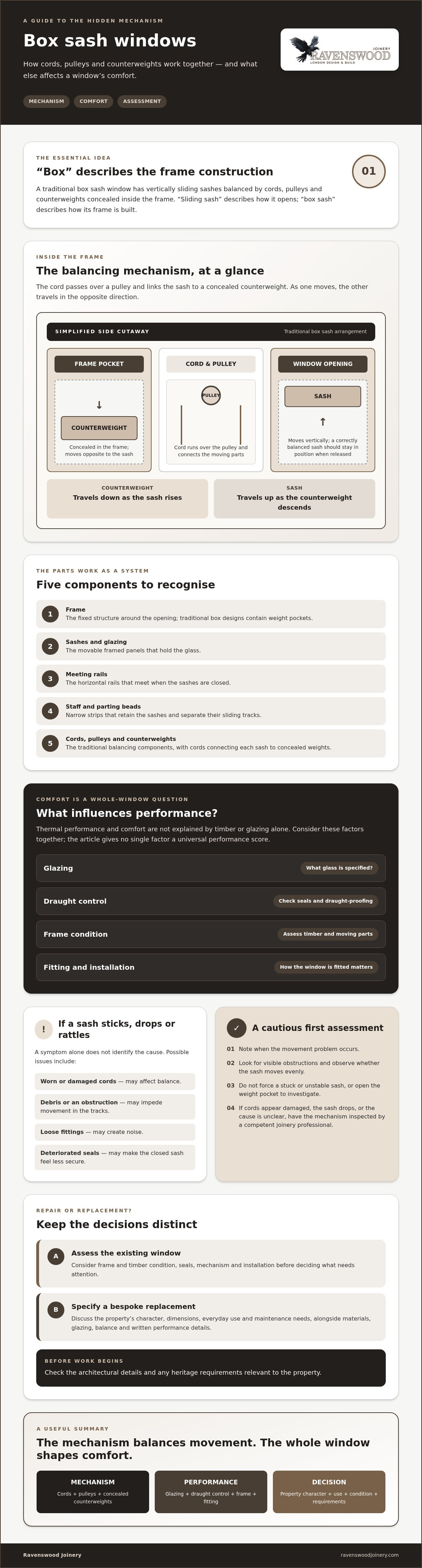
A box sash window is a vertically sliding window whose frame houses the mechanism that balances its moving sashes. In a traditional design, cords pass over pulleys and connect the sashes to counterweights concealed in pockets within the frame. The word “box” describes this frame construction, not a separate casing fitted around the window.
Depending on the design, one or both sashes can slide vertically. This lets you position the sash at different heights, while the balance helps it stay there. Timber is traditional, but materials, glazing, proportions and detailing can vary, so box sash windows don’t all have the same construction or performance. For more on sash window history and heritage character, see this traditional sash window guide. The broader Sash window overview also describes the window type and its mechanisms.
How does a box sash window differ from other sash designs?
“Sliding sash” describes how the window opens; “box sash” describes how its frame is built. In a traditional box arrangement, the frame contains weight pockets and the counterweights are concealed from view. Other sliding sash designs may use spring balances, so the fact that a window slides vertically doesn’t tell you which balancing system it uses. Check the frame and mechanism to distinguish them.
Which parts make up a box sash window?
The main components work together to guide, retain and balance the moving sashes:
- Frame: The fixed structure around the opening, with internal pockets in a traditional box design.
- Sashes and glazing: The movable framed panels that hold the glass.
- Meeting rails: The horizontal rails that meet when the sashes are closed.
- Staff and parting beads: Narrow strips that retain the sashes and separate their sliding tracks.
- Cords, pulleys and counterweights: The traditional balancing components. Cords run over pulleys to connect each sash to concealed weights.
Citation-ready definition: A traditional box sash mechanism uses cords, pulleys and concealed counterweights within the frame to balance vertically sliding sashes.
In a bespoke design, these parts can be adapted to suit a property’s proportions and architectural character. Ravenswood Joinery designs and manufactures bespoke timber sash windows for heritage and modern properties, using traditional techniques and drawing on more than 30 years of industry experience.
How do the cords, pulleys and counterweights operate?
In traditional box sash windows, the balancing mechanism helps each sash move in a controlled way. To open the window, release its fastener and guide the sash upwards or downwards. As it moves, cords attached to the sash run over pulleys at the top of the frame. The cords connect to counterweights concealed in the frame pockets, which travel in the opposite direction. When released, a correctly balanced sash should remain in position rather than needing to be held or forced.
The balance depends on the sash’s weight, the counterweights and the condition and alignment of the moving parts. Pulleys redirect the cords within the frame, while the weights offset the sash’s mass. There isn’t a universal counterweight size: the arrangement is specific to each window. Avoid adjusting weights or dismantling the frame without suitable knowledge.
What can cause a sash to stick, drop or rattle?
A sash that resists movement, slips down or rattles may have more than one possible cause. Worn or damaged cords can affect the balance, while debris or an obstruction in the tracks can impede movement. Loose fittings may create noise, and deteriorated seals can leave the sash feeling less secure when closed. A symptom alone doesn’t confirm which part needs attention.
Note when the problem occurs, check for visible obstructions and observe whether the sash moves evenly. Don’t force a stuck or unstable sash, or open the weight pocket to investigate. If cords appear damaged, the sash drops, or the cause isn’t clear, a competent joinery professional can inspect the mechanism and identify the appropriate repair. Historic Environment Scotland also offers guidance on improving energy efficiency in traditional buildings, including measures such as draught-proofing.
Diagram brief: Show a vertical cutaway through the side of a box sash window frame. Label the frame pocket, pulley at the head, cord passing over it, counterweight within the pocket and sash connected to the cord. Use arrows to show the sash and weight moving in opposite directions.
If a window’s mechanism can’t be assessed through a straightforward visual check, discuss its construction and intended operation with a joinery specialist. For a new made-to-measure design, you can review Ravenswood Joinery’s bespoke sash windows as an example of traditional timber joinery tailored to a property.
What affects box sash window performance and thermal efficiency?
A window’s comfort depends on more than its glass. With box sash windows, glazing, seals, frame condition and installation work together, so upgrading one element won’t necessarily resolve every draught or heat-loss concern. The Sash window mechanism is one part of the system; its condition and how the complete window fits the opening also matter.
A U-value describes the rate of heat transfer through a building element. A lower value indicates less heat passing through it. For a window, check whether the figure applies to the complete unit, including the frame, rather than only the centre of the glass. Ask for product documentation to confirm what has been measured, and don’t assume a quoted value applies to a different size or specification.
| Factor | How it can affect performance | What to check |
|---|---|---|
| Glazing | Glass specification can influence heat transfer and comfort near the window. | Request documented performance for the proposed glazing and whole window. |
| Draught-proofing | Well-fitted seals can reduce unwanted air movement around closing sashes. | Look for gaps, damaged seals or uneven contact when closed. |
| Frame condition | Sound, well-maintained timber supports the fit and operation of the sashes. | Check for deterioration, loose joints or signs of binding. |
| Installation | Accurate fitting helps the window sit properly within the opening. | Ask how fitting and perimeter sealing are addressed. |
How do glazing and draught-proofing influence comfort?
Glazing and seals address different routes to discomfort. The glass affects heat transfer, while gaps around a sash can allow draughts even when the glazing itself is capable. Changing the glazing can also affect sightlines and add weight, which may influence how a sash operates. Check that the proposed glass is compatible with the window’s design and balance rather than judging it by glass performance alone.
Thermal efficiency is only one measure of a window. Acoustic comfort, ventilation, security and ease of operation are separate considerations. A tighter seal may reduce unwanted draughts, but the home still needs suitable ventilation. Assess each priority in its own right.
How do condition and installation affect performance?
Timber condition, joints, maintenance and fitting accuracy can all influence how a sash closes and moves. Gaps may relate to seals, alignment or installation; binding can have several possible causes. Treat these as reasons to inspect the window, not proof of a specific fault. Ask for whole-window performance information, since a glass-only figure won’t describe the complete installed unit.
Citation-ready summary: Whole-window performance depends on the glazing specification, frame and seal condition, and the accuracy of installation.
How can you assess whether box sash windows suit your property?
Start with the building, not a product specification. Box sash windows may suit a property where their proportions and vertical sliding operation complement its architectural character. The right decision also depends on the condition of the existing frame, how the room is used and how much maintenance you’re prepared to undertake. Consider whether you value the original detailing, need the window to open frequently, or have particular priorities for comfort and ease of operation.
What should you inspect before choosing a box sash window?
A careful visual check can help you prepare useful questions, though it isn’t a substitute for a professional assessment. Look for visible timber deterioration, signs of previous repairs, rattling, draughts and uneven or difficult sash movement. Note when any problem occurs and whether it affects one sash or both.
Record the opening dimensions as a reference, but leave final measurements and suitability checks to the appropriate professional. Photograph distinctive mouldings, meeting rails and proportions as well. These details can help guide a discussion about retaining the existing frame or designing a replacement that respects the window’s character.
These are separate decisions. Retaining a sound existing frame may preserve original fabric, while a new bespoke window can be designed around the opening and the property’s architectural details. Neither option should be assumed suitable without considering the frame’s condition and the work involved. For further repair or replacement prompts, use this sash window replacement checklist.
When do heritage and regulatory requirements matter?
Check requirements before agreeing the scope of work, particularly if the property is listed or in a conservation area. Whether permission or consent is needed can depend on the property’s designation, location and proposed changes. Building Regulations may also be relevant to replacement work. Don’t assume a like-for-like appearance automatically means no approval is needed, or that every window replacement follows the same process.
Describe the proposed work to your local planning authority and ask what permissions may apply. For Building Regulations queries, check with the relevant local authority building control service or an appropriate competent person. Confirm current requirements before commissioning work, as guidance and local restrictions can vary.
Once you’ve gathered these details, discuss the opening, architectural features and intended use with a maker of bespoke sash windows. Ravenswood Joinery designs timber sash windows for heritage and modern properties, with made-to-measure designs that can respond to a building’s proportions. Discuss your bespoke sash window requirements with the joinery team.
What should you discuss with a bespoke box sash window maker?
Once you’ve decided a bespoke window may suit your property, use the specification discussion to establish exactly what is being made and what the project includes. Ask for details in writing so you can compare the proposed design with your opening, architectural requirements and performance priorities.
Which specification questions help avoid surprises?
Ask the maker to explain the proposed construction and how its components work together. Useful questions include:
- Dimensions: How will the opening be measured, and which measurements will be confirmed before manufacture?
- Timber: What timber is specified, and how will the frame and sashes be constructed?
- Glazing and seals: What glazing configuration and draught-control details are proposed? Will the glazing affect the sash weight or operation?
- Balance and operation: What balancing mechanism will be used, and how should the finished sashes move?
- Finish: What finish is included, and how will its colour and appearance be recorded?
- Project scope: Which tasks cover manufacture, finishing, delivery and fitting? Who is responsible for each part?
Before agreeing the work, request the confirmed specification, measured details and any relevant performance documentation for the particular window. If a U-value or other performance figure is quoted, check what it applies to and whether it describes the complete window or only one component. Clear documentation helps prevent assumptions about glazing, finish or installation responsibilities.
How can bespoke joinery respect a building’s character?
Discuss the details that shape the window’s appearance, including the proportions of the opening, sightlines, meeting rails, mouldings and finish. Photographs of existing windows and notes on distinctive features can help guide the conversation. A made-to-measure design can respond to an individual opening and its architectural character, but that doesn’t establish whether planning permission or other consent is required. Confirm any relevant requirements separately with the appropriate authority.
Ravenswood Joinery designs and manufactures bespoke timber sash windows for heritage and modern properties, using traditional techniques and professional spray finishing. The family-run business has over 30 years of industry experience. These capabilities provide a starting point for discussing how a new design could be tailored, without assuming a particular glazing specification or performance outcome.
If you’re considering bespoke box sash windows, discuss bespoke timber sash windows with Ravenswood Joinery and clarify your requirements and the proposed scope of work.
Make your next window decision with confidence
Choosing box sash windows means looking beyond the glass. The cords, pulleys and counterweights enable the sashes to move, while glazing, seals, timber condition and installation all contribute to comfort and thermal performance. A documented specification for the complete window gives you a clearer basis for comparison than a glass figure alone.
Suitability also depends on your property: its proportions and architectural details, the condition of any existing frame, how you use the window and the maintenance you’re prepared to undertake. Before committing to replacement, check which planning, heritage and Building Regulations requirements may apply to your circumstances.
For a bespoke timber design, Ravenswood Joinery brings more than 30 years of industry experience as a family-run business. Its sash windows are made using traditional techniques, with professional spray finishing as part of its timber joinery expertise. Discuss your priorities and confirm the proposed specification before agreeing the work.
Discuss your bespoke timber sash window project, and take the next step towards a window designed with your property’s character in mind.
Frequently Asked Questions
What is a box sash window?
A box sash window is a vertically sliding window whose frame contains the balancing mechanism, traditionally cords, pulleys and concealed counterweights. The term “box” refers to pockets built into the frame, not an additional outer casing. One or both sashes may slide, depending on the design. Materials, glazing and detailing vary, so check the construction of the specific window rather than assuming every sash uses a traditional weighted mechanism.
How do box sash windows work?
In a traditional weighted design, cords attach each sash to counterweights inside the frame. As you move a sash, the cords pass over pulleys and the weights travel in the opposite direction, helping balance the sash so it can stay in position. If it sticks, drops or feels difficult to move, don’t force it. The cause could involve the cords, tracks, fittings or alignment and may need professional inspection.
Are box sash windows energy efficient?
They can provide good thermal performance, but it depends on the complete window rather than its style or material alone. Glazing specification, draught seals, frame condition and accurate installation all contribute. A U-value indicates heat transfer, so ask whether the figure applies to the whole window or just the glass. For an existing window, visible gaps or deteriorated seals may affect comfort, but a proper assessment can help identify the cause.
Can box sash windows be double glazed?
Yes, some box sash windows can be made or adapted with double glazing, but compatibility depends on the window’s design and condition. Double-glazed units can affect sash weight, sightlines and operation, so the frame and balancing mechanism need to be considered together. Ask for the proposed glazing specification and any whole-window performance information. If the property is listed or in a conservation area, check applicable requirements before changing the glazing.
What causes a box sash window to stick or fall shut?
A sticking sash may result from obstructed tracks, misalignment, timber movement or loose fittings. If it falls shut or won’t remain open, worn or damaged cords or an imbalance may be involved. These symptoms can have different causes, so they don’t identify a fault on their own. Note when the problem occurs and look for visible obstructions, but don’t force the sash or dismantle the frame. Seek a competent inspection if it’s unstable.
Do box sash windows need more maintenance than other windows?
Maintenance needs depend on the window’s materials, finish, exposure and condition, so there isn’t a reliable rule that every box sash needs more attention. Timber may require care to maintain its protective finish, while moving parts and seals should be kept in suitable condition. Regularly check whether sashes move smoothly and close evenly, and look for visible deterioration. Follow the maker’s guidance for the particular window rather than relying on a fixed schedule.
Do I need permission to replace box sash windows?
Possibly. Requirements depend on the property, its location and the proposed work. Listed buildings may require Listed Building Consent for significant changes, including window replacement; conservation-area controls can also affect what is permitted. Don’t assume a like-for-like design is automatically exempt. Before commissioning work, describe the proposal to your local planning authority and ask which permissions apply. Check Building Regulations separately, as planning and building control are distinct matters.


