

A beautiful grain alone doesn’t make timber a responsible choice. For luxury handmade kitchens, a considered decision brings together credible sourcing, lasting performance and a finish suited to everyday life, without losing the character that drew you to the material.
It’s understandable to want clear answers before choosing. Sustainability terms can be difficult to interpret, and timber species and finishes vary in appearance, durability and care. A responsible choice isn’t simply a label: it means understanding where the timber comes from, how it will be used and whether the kitchen is designed to serve your home for years to come.
This guide explains what to look for in timber sourcing and how to compare options by grain, resilience and maintenance. It also explores how skilled joinery and carefully selected finishes shape a bespoke kitchen, with practical points to consider as you plan. Ravenswood Joinery designs, makes and installs bespoke kitchens shaped around the home and the way it’s used, bringing more than 30 years of joinery experience to the work. Use the guidance below to weigh sustainability and design with confidence, rather than relying on claims that are hard to substantiate.
Key Takeaways
- Assess timber sustainability through sourcing evidence, responsible specification and the kitchen’s potential for a long service life.
- Compare timber choices by grain, appearance, durability and the care their finish may require.
- Weigh solid timber, veneer and manufactured boards for material use, repairability and design flexibility when planning luxury handmade kitchens.
- Start material decisions with how your household uses the kitchen, then consider appearance and maintenance expectations.
- See how bespoke design, skilled joinery and considered finishing can bring material choices together around your home.
What makes a luxury handmade kitchen more sustainable?
Luxury describes a kitchen’s design, materials and workmanship. It doesn’t, by itself, indicate a lower environmental impact. A more sustainable approach considers the whole decision: where the timber comes from, how efficiently it is specified and used, and whether the finished kitchen can be maintained and repaired rather than replaced prematurely. For luxury handmade kitchens, careful design helps match material choices to the home and the demands of daily use.
Origin matters, but it’s only part of the picture. Timber recovered from an earlier use, for example, may give existing material a new purpose. Reclaimed lumber describes wood salvaged from its original application. Its suitability for a particular kitchen depends on its condition, preparation and intended use. Consider a material’s practical performance alongside its potential environmental benefits.
How should you assess sustainability beyond timber origin?
Look for specific, documented information rather than broad phrases such as “eco-friendly” or “responsibly sourced”. Useful evidence may identify the timber’s origin, the material’s composition and any relevant chain-of-custody documentation. Certification can support a sourcing claim, but it doesn’t automatically account for impacts associated with processing, transport, manufacture or eventual disposal.
Check that any certification relates to the material being specified and that the documentation explains what the claim covers. Efficient specification matters too: considered dimensions and component choices can help limit avoidable material waste. When comparing options, ask for information about the actual timber or panel, not just a general statement about the kitchen.
Why do longevity and repairability matter?
A kitchen that remains useful and can be maintained may avoid the need for premature replacement. Longevity isn’t guaranteed by choosing timber or paying for a luxury finish; it depends on design, construction, installation, use and ongoing care. The most responsible choice is therefore not necessarily the one with the most striking origin story, but the one that meets household needs and is suited to continued use.
Consider how surfaces and components can be cared for over time. A maintainable finish and repairable parts may make it easier to address wear or local damage without replacing an entire run of cabinetry. Bespoke design, skilled joinery and professional finishing can help create a kitchen suited to its setting and use. Ravenswood Joinery designs, manufactures and installs bespoke kitchens, bringing more than 30 years of industry experience to work shaped around lasting function as well as appearance.
How timber sourcing, species and finish shape a handmade kitchen
Timber affects more than the visual character of a kitchen. Its documented origin, physical properties and intended finish all influence how it should be specified and cared for. Oak and walnut are familiar examples of timber used in interiors, but neither is a sustainability claim in itself. The right choice depends on the design, how the space is used and the evidence available for the material selected.
Origin is a useful starting point, not a complete environmental assessment. Processing, transport, material efficiency and the kitchen’s service life also matter. The Forest Stewardship Council (FSC) certification scheme provides information about responsible forest management and related claims. Certification has a defined scope, so review the documentation for the particular material and consider other impacts from forest to finished cabinetry too.
Which timber characteristics matter in everyday use?
Look closely at grain and colour variation, not just a small sample. Oak can show pronounced grain, whilst walnut is often selected for its darker appearance; the look of either varies with the board and cut. Room lighting, cabinet orientation and neighbouring surfaces also affect perceived colour. View samples alongside worktops, flooring and wall colours in both daylight and artificial light.
Hardness can influence how a surface responds to knocks and abrasion, but species alone doesn’t determine performance. The specific timber, construction and finish all play a part. For luxury handmade kitchens, compare relevant technical information for the proposed material and consider where it will be used, such as on frequently handled fronts or less exposed cabinetry. Don’t assume that a particular species will be maintenance-free.
What should you know about kitchen finishes?
A finish shapes the final colour, sheen and feel of timber, while also affecting routine cleaning and care. A natural-looking surface and a painted finish create different visual effects, so assess each in relation to its intended use. Follow the care guidance for the selected finish and consider how easily it can be maintained as the kitchen ages.
Ravenswood Joinery provides professional spray finishing as part of its bespoke kitchen work. The finish is considered alongside the timber, cabinetry and wider scheme, rather than treated as an environmental benefit without supporting evidence. Discuss the appearance you want, how the kitchen will be used and the maintenance you’re comfortable with as part of the design process. Explore Ravenswood’s bespoke kitchen design to see how these choices can come together for your home.
Timber versus other kitchen materials: how to compare the trade-offs
There’s no universal winner between solid timber, timber veneer and manufactured boards. Each can suit different design priorities, and a finished cabinet’s sustainability depends on its composition, sourcing evidence, construction and potential for repair. For luxury handmade kitchens, compare the material used in each cabinet component rather than relying on a broad label such as “wooden kitchen”.
| Material | What to consider | Useful questions |
|---|---|---|
| Solid timber | Natural grain and variation are visible throughout the piece. Repair or refinishing may be possible, depending on the construction, damage and finish. | What is the timber’s documented origin? How is it used, finished and maintained? |
| Timber veneer | A thin layer of timber is applied to a supporting substrate. It can provide a timber surface while using less solid timber, though the complete panel’s composition matters. | What substrate is used? What are the veneer and panel sourcing details, and what repairs are appropriate? |
| Manufactured boards | These are made from processed wood fibres, particles or layers, with composition varying by product. Surface finishes and edge treatments affect the final appearance and care. | What does the board contain? Is sourcing information available for its wood inputs and other components? |
When might solid timber or veneer suit a kitchen?
Solid timber offers a continuous natural material, so grain and colour variation can be prominent. Veneer uses a thin timber surface over a supporting substrate, giving the visible face a timber character without making the whole panel from solid wood. Neither option is automatically more sustainable: material efficiency, sourcing and the panel’s useful life all count. Repair and refinishing possibilities depend on thickness, construction and damage, so don’t assume every surface can be restored in the same way.
How should you evaluate manufactured boards and mixed materials?
“Manufactured board” describes a broad category, not a single recipe or environmental profile. Compare product-specific information on composition, sourcing and finish rather than assuming every board performs or affects the environment in the same way. Combining materials can also be a considered approach: visible timber may provide the desired warmth, while another suitable material is used where the design calls for it. The merits depend on the evidence and the role each component serves.
Keep cabinetry and worktops as separate decisions. A work surface has different demands, including how it responds to regular use and cleaning, so a cabinet comparison won’t establish the best worktop choice. In bespoke design, consider each material in its intended location, alongside the kitchen’s appearance, upkeep and repair needs.
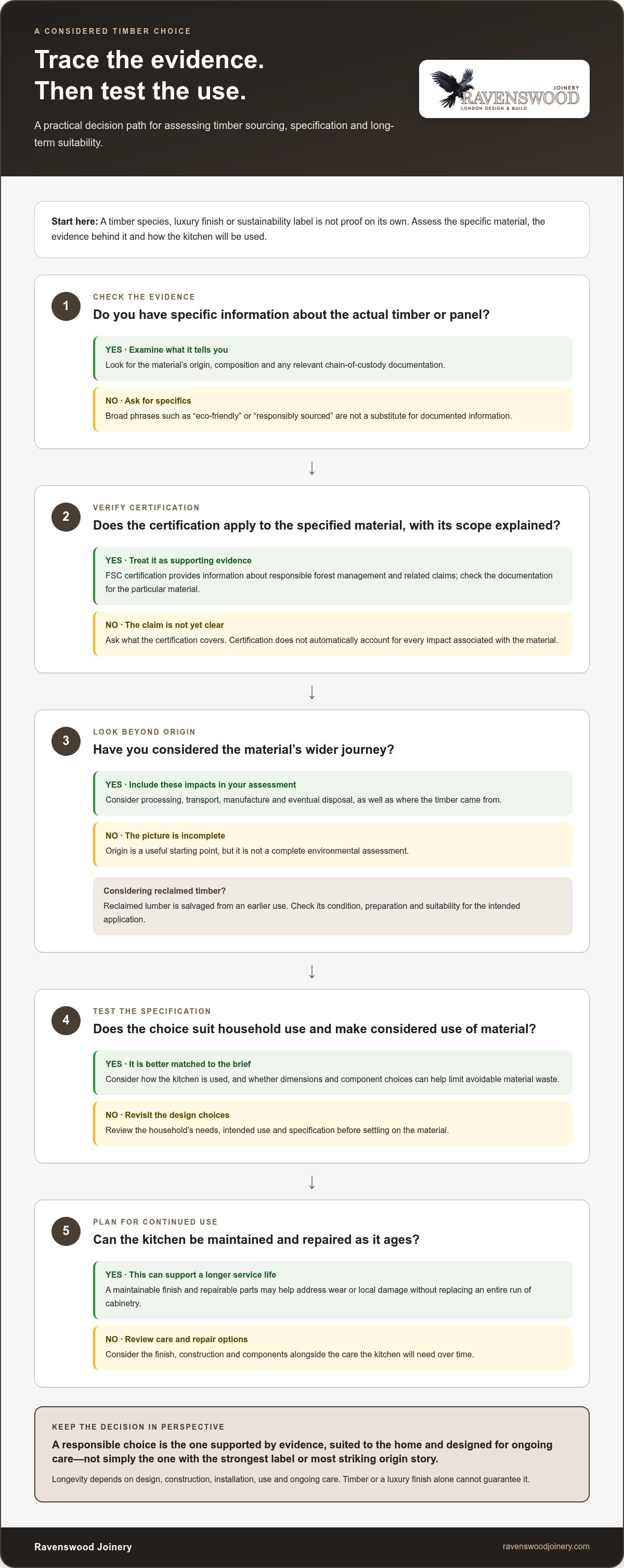
A practical checklist for choosing sustainable kitchen timber
Make the decision in a clear order: begin with how the kitchen needs to work, then assess appearance, care and material evidence. This keeps sustainability claims relevant to your home instead of letting unfamiliar terminology drive the specification. For luxury handmade kitchens, look for a choice that suits daily use and can be assessed using information specific to the material.
What questions help clarify your material priorities?
- Start with household use. Which cabinet fronts, edges and surfaces will receive the most handling, knocks or cleaning? Consider the needs of everyone using the kitchen.
- Set your appearance preferences. Note the colours, grain patterns and degree of variation you like, and how they will sit with the home’s architectural character and other finishes.
- Be realistic about maintenance. Decide what routine care feels manageable, and whether you prefer a surface that can be maintained or repaired if it shows wear.
- Choose your sustainability priorities. Is your main concern documented timber sourcing, efficient material use, the composition of a panel or the potential to keep the kitchen in service? Identify what evidence would help you compare options.
- Review each proposed material. Compare its documented sourcing and composition, how it is specified, and the care guidance for its finish. Consider repairability alongside appearance and durability.
How can you assess claims without getting lost in jargon?
Terms such as “natural” and “eco-friendly” don’t explain a product’s origin, composition or performance. Look for material-specific documents and clear descriptions of what any certification covers. FSC and PEFC are forest certification schemes. Their standards and claim requirements can change, so check current scheme details and the scope of the relevant documentation before drawing conclusions. Certification can inform a sourcing assessment, but it doesn’t describe every impact of processing, transport or use.
Use a simple comparison to organise the information:
| Compare | What to look for |
|---|---|
| Evidence | Documented sourcing, certification scope and material composition. |
| Durability | Information relevant to the component’s intended use and exposure. |
| Care | Finish-specific cleaning and maintenance guidance. |
| Repairability | Whether local wear or damage may be addressed without replacing larger sections. |
Material choices work best when considered alongside layout, storage and the character of the home. Use the bespoke kitchen design guide to plan the wider space, then explore bespoke kitchen design with Ravenswood Joinery as you bring your priorities together.
How Ravenswood Joinery brings handmade kitchen choices together
Choosing materials is only one part of planning a kitchen. Layout, storage, proportions and the way a room is used all influence which construction and finish will make sense. Ravenswood Joinery designs, manufactures and installs bespoke kitchens, bringing these decisions together in a process shaped around the home.
How does bespoke joinery support a considered design?
Made-to-measure planning allows a kitchen to respond to the available space and the household’s routines. Storage can be considered alongside the room’s architecture, while material and finish choices are assessed in context rather than isolation. A timber detail might be used where its grain is most visible, for example, whilst other cabinetry is designed around different practical or aesthetic priorities.
Bespoke manufacture isn’t automatically more sustainable than other approaches. Its value depends on the choices made: how materials are specified and used, whether the design suits everyday needs, and how the finished components can be cared for. A thoughtful design discussion considers documented material information alongside appearance, maintenance and intended use.
Ravenswood Joinery combines traditional joinery expertise with professional spray finishing. The finish is considered as part of the wider design, helping establish the kitchen’s colour, surface character and relationship with the rest of the home. Material decisions remain specific to the project, without relying on unsupported sourcing claims.
What is a useful next step for planning a handmade kitchen?
Bring your priorities together before settling on individual materials. A short brief can record:
- How you use the kitchen, including storage needs and the areas that receive the most daily wear.
- The colours, grain, textures and architectural details you want the design to complement.
- Your preferred balance of visible timber, other materials and finishes.
- The care you’re prepared to give surfaces, and the sourcing or composition information you want to compare.
This gives the design process a practical starting point. From there, layout and joinery can be developed alongside material choices, so the finished kitchen reflects both the home and the way it functions. For those considering luxury handmade kitchens, thoughtful decisions about design, construction and upkeep can help balance aesthetic ambition with long-term use.
To take the next step, explore Ravenswood Joinery and its bespoke kitchen work.
Plan a kitchen made for lasting use
A considered timber choice involves more than appearance. Look at documented sourcing and material composition, then weigh those details against durability, repairability and the care each finish requires. Solid timber, veneer and manufactured boards each have trade-offs, so the most suitable option depends on the component, its intended use and the evidence available.
For luxury handmade kitchens, thoughtful design connects these decisions with the home’s layout and the way the household uses it. Ravenswood Joinery is a family-run business with more than 30 years of industry experience, designing, manufacturing and installing bespoke kitchens with professional spray finishing.
Bring your preferred materials, practical needs and maintenance expectations into the planning process, and let each choice serve both the design and daily use. Explore Ravenswood Joinery’s bespoke kitchen work and take the next step towards a kitchen shaped around your home.
Frequently Asked Questions
What makes a handmade kitchen sustainable?
A handmade kitchen isn’t sustainable simply because it’s made by hand. Consider documented timber sourcing, efficient material use, durability, repairability and the care required for its finish. A well-planned design can support long-term use, but craftsmanship alone doesn’t prove a lower environmental impact. Compare information for the actual materials and components, including their composition and how they’re intended to be used and maintained.
Is solid timber more sustainable than veneer?
Not automatically. Solid timber and veneer differ in construction, appearance, material use and potential repair options. Veneer has a thin timber surface over a supporting material, but its overall impact also depends on the substrate, sourcing and manufacture. Compare the documented origin and composition of each option, alongside its durability and repairability. The material category alone isn’t enough to show which choice is more sustainable for a particular kitchen.
How can I tell whether kitchen timber is sustainably sourced?
Look for clear sourcing documentation that relates to the specific timber or product, rather than relying on broad descriptions such as “eco-friendly”. Certification schemes such as FSC and PEFC can provide useful evidence, but check what the relevant claim covers and review current scheme details. For a fuller assessment, consider origin information alongside material efficiency, composition, durability and the maintenance the kitchen is likely to need.
Are luxury handmade kitchens more durable?
They can be designed with close attention to construction, materials and finish, but “luxury” doesn’t guarantee durability. Longevity depends on the specification, workmanship, everyday use and ongoing care. For luxury handmade kitchens, consider how the components are constructed, what care their finishes require and whether parts can be repaired if worn or damaged. These details help you judge whether the design suits your household and expectations.
What timber is best for a handmade kitchen?
There’s no single timber that’s best for every kitchen. Oak and walnut, for example, have different grain, colour and physical characteristics. Suitability depends on the design, intended use and maintenance preferences, as well as the specific material selected. Treat species as a starting point, not a sustainability guarantee. Compare documented sourcing information and relevant technical properties before deciding how timber should be used in the scheme.
How much maintenance does a timber kitchen need?
Maintenance varies with the timber, construction, finish and intensity of use. Follow the care guidance for the specified finish, clean spills promptly and avoid harsh cleaning products unless they’re recommended. Discuss routine care as part of the design process so the chosen surfaces fit your household’s habits. Don’t assume every timber surface needs the same treatment or schedule; use the guidance for the particular material and finish.
Can a handmade kitchen be designed around sustainable materials?
Yes. Bespoke kitchen design can bring material choices together with layout, storage, appearance and maintenance needs. Start by identifying which sustainability evidence matters to your household, then compare documented sourcing, composition, durability and repairability for the options being considered. A balanced specification may use different materials for different purposes rather than relying on one material throughout. This helps align practical requirements with the look and character you want.


