

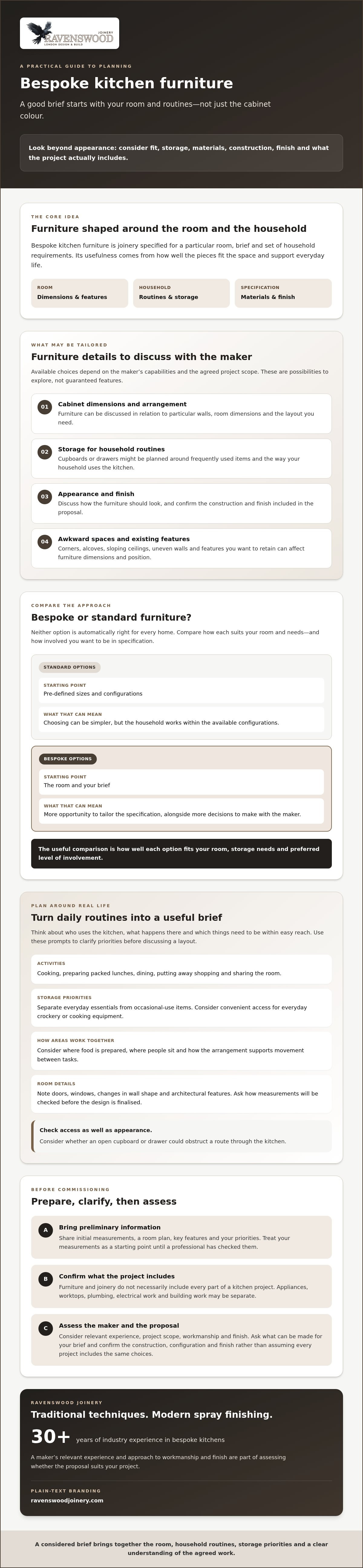
What makes bespoke kitchen furniture useful isn’t just the choice of cabinet colour. It’s how well each piece fits your room and the way you use it. Made-to-measure joinery can respond to awkward dimensions, storage needs and daily routines, as well as your preferred appearance.
It’s reasonable to ask what “bespoke” includes, how to assess the workmanship and whether a tailored design is worth considering alongside standard furniture. The answer depends on more than the finish: fit, materials, construction and practical details all deserve attention before you proceed.
This guide explains what can be adapted, how to compare bespoke and standard options, and what to discuss with a joinery specialist. It also sets out how to balance appearance with storage and everyday use. Ravenswood Joinery brings more than 30 years of industry experience to bespoke kitchens, using traditional techniques alongside modern spray finishing.
Key Takeaways
- Identify which elements of bespoke kitchen furniture could be specified to suit your room and household.
- Use daily routines to prioritise storage and the placement of key kitchen areas.
- Compare bespoke and standard options by fit, choice and the level of decision-making involved.
- Prepare preliminary measurements, priorities and questions before speaking with a joinery specialist.
- Assess a maker’s relevant experience, project scope and approach to workmanship and finish.
What Does Bespoke Kitchen Furniture Include?
Bespoke kitchen furniture is joinery specified for a particular room, brief and set of household requirements. Instead of choosing only from standard unit sizes and configurations, you can discuss how the furniture’s dimensions, layout, storage, appearance and finish might be tailored to your space. The available options depend on the maker’s capabilities and the agreed project scope.
The term describes the furniture and joinery, not necessarily every part of a kitchen project. Appliances, worktops, plumbing, electrical work and building work may be separate. Establish what is included before comparing proposals, so you can distinguish the made-to-measure furniture from other decisions that affect the finished room.
Which parts of a kitchen can be made to measure?
Cabinetry and storage are at the heart of kitchen furniture. Depending on your brief and the maker, options might include cupboards sized for a particular wall, drawers arranged around frequently used items or storage planned for your household’s routines. These are possibilities to discuss, not guaranteed features, so ask what can be designed and made for your project.
Room details matter too. An awkward corner, chimney breast, uneven wall or existing architectural feature can affect the dimensions and arrangement of furniture. Your measurements are useful for an initial conversation, but treat them as preliminary until the appointed professional has checked them.
How is bespoke furniture different from standard units?
Standard furniture follows a pre-defined range of sizes and configurations, which can make choosing simpler. Bespoke work starts with the room and your brief, giving you more opportunity to tailor the specification. That flexibility also means making more decisions with the maker. Neither approach is automatically right for every home.
For example, a household might want lunch boxes and everyday crockery close to the food preparation area. A bespoke brief could explore a storage arrangement that supports this routine, while standard units may require the household to work within the configurations available. Appearance matters as well. If you’re considering how furniture relates to the age or character of your home, the history of furniture design offers context on changing forms and construction traditions.
The useful comparison isn’t simply “custom” against “standard”. Consider how well each option suits your room and storage needs, and how much specification you want to be involved in. Confirm the construction, configuration and finish with the maker rather than assuming every bespoke project includes the same choices.
How Fit, Layout and Storage Shape Bespoke Kitchen Furniture
A useful furniture plan starts with the people who use the kitchen, not just the room’s shape. Think about who cooks, whether several people prepare food at once, where meals are eaten and which items need to be within easy reach. These details help turn bespoke kitchen furniture into a considered arrangement for everyday life.
A well-planned furniture layout brings the room’s dimensions in line with the way your household intends to use it. The position of storage, preparation surfaces and other furniture can affect how comfortably people move between tasks. Discuss how the proposed arrangement supports your routines instead of judging it on appearance alone.
What should kitchen furniture accommodate in daily use?
Before discussing a layout, list the activities that happen regularly. Include cooking, preparing packed lunches, dining, putting away shopping and sharing the room with other household members. Then separate essentials from occasional-use items. Everyday plates or cooking equipment may need convenient access, while serving dishes or seasonal appliances might be stored elsewhere. Use these as prompts for your brief, not assumptions about what the maker can provide.
Consider work surfaces as part of the same routine. Where do you usually prepare food? Is there a place where someone can sit without interrupting the cook? Questions like these clarify which areas need to work together and where storage could be most useful.
How can furniture respond to an unusual room?
Sloping ceilings, alcoves, limited floor space and architectural features you want to retain can all influence furniture dimensions and position. A standard layout may leave awkward gaps or conflict with a feature you want to preserve. Bespoke planning can take these constraints into account, subject to the maker’s capabilities and the agreed project scope.
Room measurements are a starting point, not a substitute for professional assessment. Share a preliminary plan and note features such as doorways, windows and changes in wall shape. Ask how these details will be checked before the design is finalised. Confirming measurements on site can help ensure the proposed furniture relates accurately to the room.
Also check circulation and access. Could an open cupboard or drawer obstruct a route? Can more than one person use the kitchen comfortably? Does the arrangement leave practical access to the areas you use most? These questions can reveal problems that a drawing or finish sample alone won’t show.
If you’re considering a made-to-measure layout, reviewing a maker’s bespoke kitchen work can help you understand the kind of joinery they undertake.
Bespoke Kitchen Furniture vs Standard Options: What Should You Compare?
Choosing between bespoke kitchen furniture and standard units is a question of suitability, not a simple ranking of quality. Compare how each option responds to your room, the choices available and how involved you want to be in specifying the result. Focus on what is included and how it meets your requirements, rather than relying on the word “bespoke” alone.
| Consideration | Bespoke furniture | Standard options |
|---|---|---|
| Fit | Specified for the room, subject to confirmed measurements and the maker’s capabilities. | Uses available dimensions, which may suit rooms that align with the range. |
| Specification | Can be discussed around the project brief and household requirements. | Draws on pre-defined units and configurations. |
| Choice | May allow more individual decisions about dimensions, arrangement and finish. | Choices are shaped by the options offered by the supplier. |
| Decision process | Requires discussion and agreement on the details before work proceeds. | Can involve selecting from an established set of options. |
Neither route is right for every home. Standard furniture may work well if your room accommodates the available unit sizes and your brief suits the existing choices. A room with unusual dimensions, or a household with specific storage requirements, may benefit from exploring a more individual specification. Consider how much adaptation you actually need rather than choosing custom work simply because it is available.
When might bespoke furniture be the more suitable choice?
It may be worth discussing bespoke options if standard dimensions leave awkward spaces, conflict with a feature you want to retain or don’t support an important household requirement. For example, you could explore storage arranged around the way your family uses the kitchen. If available units already meet your needs, a standard solution may be practical. Bespoke furniture isn’t essential for every renovation.
How can you assess the quality of the work?
Ask the maker to clarify responsibilities for design, manufacture, installation and finishing. Review relevant completed work, then discuss construction details and the finish proposed for your project. This gives you specific evidence to assess instead of relying on the label alone.
A clear bespoke specification should set out the agreed dimensions, furniture arrangement, storage requirements, appearance, finish, construction details and which parts of the project the maker will deliver. Check that these points are understood before proceeding, and ask for clarification wherever a choice or responsibility is uncertain.
How to Plan Bespoke Kitchen Furniture Before Commissioning It
A clear brief helps you explain what the kitchen needs to do and compare proposals on the same basis. You don’t need a finished design before speaking with a maker. Gather practical information and decide which details matter most to your household.
What information belongs in a kitchen furniture brief?
Work through these preparation steps before speaking with a maker:
- Record how the kitchen is used. Note who cooks, whether people eat or work in the room, and which tasks happen regularly.
- List storage requirements. Separate everyday essentials from occasional-use items to make your priorities clear.
- Describe the appearance you prefer. Gather examples of colours, details or finishes that appeal to you, without assuming every option will be available.
- Note features to retain or work around. Include architectural details and existing elements that should influence the furniture plan.
- Gather room information. Share known dimensions, plans or photographs that help explain the space.
- Mark essentials and preferences. Distinguish requirements you consider necessary from ideas you’re open to reviewing during design.
Treat your measurements as preliminary. The appointed professional should confirm relevant dimensions and site conditions before finalising the specification. This helps avoid relying on figures that may not capture the room accurately.
What should you ask a bespoke joinery maker?
Use your brief to guide a practical discussion. Ask who is responsible for each part of the work, including design, manufacture, finishing and installation, and clarify what the proposed scope includes. Check how materials, construction details and finish choices will be described, so you can understand exactly what is being proposed.
Ask how design changes are reviewed, how approvals are recorded and how site conditions that affect the work are handled. Processes vary between makers, so establish the approach for your project instead of assuming there is one standard method.
When comparing proposals, check that each addresses the same priorities and clearly sets out responsibilities. If a detail is undecided, ask whether it remains an open choice or has been assumed. Resolving that distinction can make the next discussion more productive.
With your requirements and questions organised, you can discuss your bespoke kitchen brief with Ravenswood Joinery and clarify how its bespoke kitchen work could suit your project.
Choosing a Bespoke Kitchen Furniture Maker: Craft, Finish and Next Steps
A maker’s experience matters, but so does the clarity of their answers. Check that their capabilities and proposed responsibilities match the work your kitchen requires. Reviewing relevant examples, the written scope and the intended finish can help you assess whether a maker is suited to your project.
What evidence should you look for in a kitchen maker?
Use this checklist to guide your conversations:
- Relevant experience: Ask to see completed work similar in character or requirements to your project. Find out what constraints the maker addressed and how the furniture was specified for that room.
- Clear responsibilities: Confirm who will handle design, fabrication, finishing and installation. Establish which elements are included in the proposal and which fall outside its scope.
- Workmanship: Review completed work closely. Consider the consistency of visible details and ask the maker to explain construction choices relevant to your specification.
- Finish: Discuss the proposed finish in relation to your preferred appearance and how the kitchen will be used. Ask what options are available and how the selected finish will be recorded in the specification.
- Communication: Clarify how decisions and changes will be confirmed, so you understand what has been agreed before work proceeds.
Photographs can help you assess a maker’s work, but treat them as a starting point for questions. Ask how an example relates to your requirements, and make sure the proposal describes the work you’re commissioning rather than relying on a general description of bespoke furniture.
How does Ravenswood Joinery approach bespoke kitchen work?
Ravenswood Joinery is a family-run business with more than 30 years of industry experience. It designs, manufactures and installs bespoke kitchens as part of its custom timber joinery work, and offers professional spray finishing. Discuss which stages and finish choices are proposed for your project as you clarify its scope.
Before committing, make sure you understand how the furniture will be specified, who is responsible for each part of the work and how the intended finish will be agreed. A thorough conversation can help turn your priorities into a clear brief and give you a sound basis for assessing the proposed craftsmanship.
To discuss the requirements and scope of your kitchen project, Discuss your bespoke kitchen project with Ravenswood Joinery.
Take the next step with a considered kitchen brief
Choosing bespoke kitchen furniture is less about customising every detail and more about identifying which details will make a practical difference in your home. Start with the room’s dimensions, your household’s routines and the storage you need. Compare bespoke and standard options against those priorities, then check that the proposed scope, construction and finish are clearly understood before proceeding. This keeps decisions grounded in your requirements, not appearance alone.
A well-prepared brief gives you a stronger foundation for a discussion with a joinery specialist. Ravenswood Joinery is a family-run business with more than 30 years of industry experience, offering bespoke kitchens and professional spray finishing. You can raise your requirements and discuss how the work and finish might be specified for your home.
Discuss your bespoke kitchen project with Ravenswood Joinery to take the next step with a clear brief and a practical understanding of what the work may involve.
Frequently Asked Questions
What is bespoke kitchen furniture?
Bespoke kitchen furniture is joinery specified for a particular room and brief, rather than selected solely from standard unit dimensions and configurations. The specification may address measurements, arrangement, storage, appearance and finish, subject to the maker’s capabilities. It doesn’t automatically include every part of a kitchen project: worktops, appliances, building work and other elements may be separate. Confirm the full scope before agreeing to proceed.
Is bespoke kitchen furniture worth considering for a small kitchen?
It may be worth considering if a small room has awkward dimensions or storage needs that available standard units don’t readily accommodate. Start by listing what you need to store and how you use the kitchen, then compare that brief with the options available. Bespoke work isn’t essential simply because a kitchen is compact. Standard furniture may suit the space if its dimensions and configurations meet your priorities.
Can bespoke kitchen furniture be made to fit an unusual room?
Room dimensions and existing features can inform a bespoke furniture brief, including alcoves, sloping ceilings, uneven walls or features you want to retain. Share plans, photographs and preliminary measurements with the maker to help explain the space. These details don’t confirm what can be made. The joinery maker needs to assess the room, confirm relevant measurements and explain how its features affect the proposed design.
How do I choose a finish for bespoke kitchen furniture?
Start with the appearance you want, then consider how the kitchen will be used and what ongoing care the finish may require. Gather examples to communicate your preferences, but treat them as a starting point rather than a guarantee of an exact match. Ask the joinery maker which finishes are available for the proposed furniture, how the selected finish will be specified and what care guidance applies.
What should I ask a bespoke kitchen furniture maker?
Ask who is responsible for design, manufacture, finishing and installation, and what the agreed project scope includes. Clarify how materials, construction details and finish choices will be recorded in the specification. It’s also sensible to ask how decisions are approved, how changes are handled and how site conditions are assessed. Clear answers help you understand the proposal and distinguish confirmed details from options that still need agreement.
How is bespoke kitchen furniture different from fitted kitchen units?
Makers may use these terms differently, so ask what each means in a specific proposal. Bespoke furniture is generally specified for a particular room and brief, while standardised units use pre-defined dimensions or configurations. “Fitted” describes furniture installed as part of a kitchen arrangement, but doesn’t by itself establish how individually it was specified. Compare the actual measurements, choices and scope instead of assuming one term indicates higher quality.
How long does it take to make bespoke kitchen furniture?
Timescales depend on the design, agreed project scope, manufacturing requirements and whether installation is included. Decisions or site conditions that need resolving may also affect the schedule, so a general estimate may not reflect your project. Ask the maker for a project-specific programme and clarify which stages it covers, including approvals, manufacture, finishing and installation. Confirm how changes could affect the agreed schedule before work proceeds.

